The Lightweight Long Shot: A Citroën AX GT Trackday File for 2026
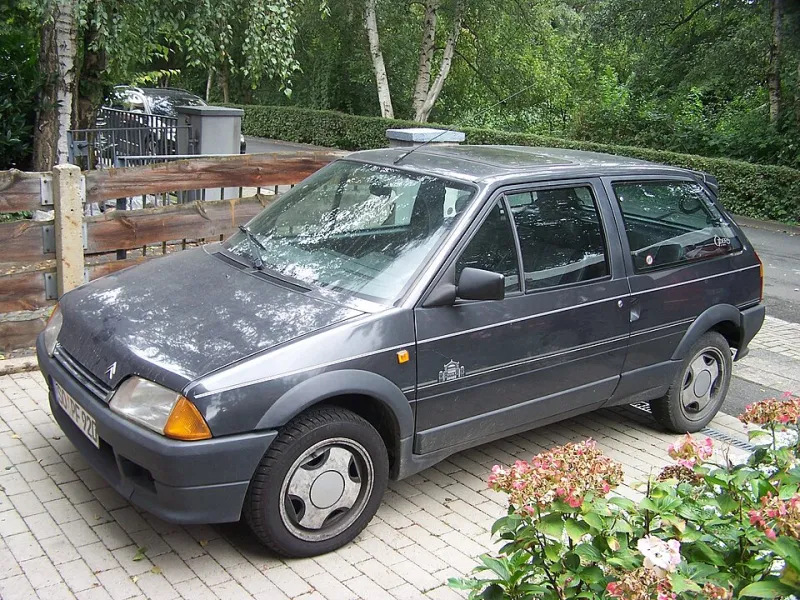
Photo: Spantax, CC BY-SA 3.0, via Wikimedia Commons
The Citroën AX GT is not the obvious answer to a 2026 trackday question. It is smaller than a Clio, older than a 205 GTI and far rarer than either. It also weighs almost nothing, revs with a cheerful TU-engine buzz and rewards a driver who understands momentum. Running one on UK circuits is a labour of love, but it is still a genuine alternative to the usual French hot-hatch suspects.
The Appeal Is Still the Scales
On paper, the AX GT looks like a footnote. We are talking about a late-1980s French hatchback with a 1.4-litre eight-valve engine, a twin-choke carburettor in many versions and a kerb weight that hovers around the 720kg mark. In 2026, that lightness is the whole point. Modern track cars have grown heavier, tyres have grown wider and lap times have become a data exercise. The AX GT cuts against all of that.
It is a car you drive with your fingertips and your right foot, not with a laptop. The steering is unassisted, the gearshift is short and mechanical, and the rear torsion-bar suspension gives it a lively, slightly old-school balance. At somewhere like Blyton Park or Cadwell Park, that combination can still be enormous fun. It will not trouble a well-driven Mégane R.S., but it will make you work for a clean lap and teach you more about braking points than a car with twice the power.
Buying: Rust Is the First Test
Before you think about tyres, pads or a cage, you need a shell. That is the hard part in 2026. AX GT values have crept up, but the survival rate has not. UK salt, damp boots and neglected rear arches have killed far more of these cars than trackdays ever did.
Check the rear arches, sills, floorpans, boot floor, scuttle area and suspension mounting points. Take a magnet and a small screwdriver. Fresh underseal can hide a remarkable amount of structural optimism. Look at the rear beam mounts and the inner wings carefully, and do not be distracted by a shiny set of wheels. Trim, glass, lights and body panels are now scarce, so a complete car with tired paint is often a better buy than a shiny mechanical rebuild with a Swiss-cheese shell.
Mechanically, the TU engine is robust and simple, but carburettor condition, ignition components and cooling system health matter. A car that has been sitting will need fresh fuel lines, a fuel filter, coolant hoses and probably a carb rebuild. Gearboxes are not made of glass, but parts are not on every motor factor’s shelf. Buy on shell condition first, mechanical completeness second, and cosmetic pride last.
Safety and Stopping
The AX GT’s original braking setup was fine for 1980s road speeds. For repeated UK trackday laps, it needs attention. Fresh discs, a decent set of track-capable pads, braided lines and high-temperature brake fluid are the minimum. Rear drums need to be properly adjusted and in good order. If you can find the parts, a sensible front brake upgrade from a later AX or Saxo variant is worth considering, but do not chase huge brakes that overwhelm the standard master cylinder and the car’s narrow tyres.
Safety is the bigger reality check. The AX is a tiny, lightweight shell with 1980s crash protection. A proper roll cage, supportive seats, harnesses, a fire extinguisher and an electrical cut-off switch should be on the list before you spend money on engine tuning. A trackday is not a race, but the AX’s lack of mass means it can be quick enough to get you into trouble. Trackday insurance is also worth pricing before you commit; modified classic hatchbacks can be a specialist conversation rather than a comparison-site click.
Suspension, Tyres and the Balance
The AX GT’s torsion-bar rear end and MacPherson-strut front end are simple, but they are not immune to age. Worn bushes, tired dampers and sagging torsion bars will make the car feel vague and nervous. Polybushes are available in some sizes, but not everything is off the shelf. Refresh the basics first: top mounts, ball joints, track rod ends and dampers. Do not slam it to the floor. The AX works because it has suspension travel, and a car that bottoms out on Cadwell’s dips is slower and less pleasant than one with a sensible ride height.
Tyres are where you can spend a lot of money very quickly. The AX GT does not need massive rubber. A modest 14-inch wheel with a sensible trackday tyre is often the better route than wide 15s that add unsprung weight and tramline on British B-roads. Check clearance around the arches and brake calipers, and remember that a lightweight car can generate surprising tyre temperatures. A soft compound may overheat on a heavy car; on the AX, it can work well, but a proper trackday tyre with a stiff sidewall will give you more predictable feedback.
Noise Tests and Circuit Practicalities
The AX GT’s carburettor induction noise is part of the charm, but it is also part of the problem. UK trackday noise tests are strict, and a raspy little hatchback with a cheap backbox can trip a static or drive-by meter. Keep the standard airbox if you can, or at least a properly silenced induction setup. Exhaust systems with removable silencers are useful, but they are not a substitute for a well-packed box. Book venues with limits you know you can meet, and do not turn up hoping to wing it. A failed noise test is an expensive way to spend a morning.
Other practicalities matter too. The AX has no modern diagnostics, so bring basic spares: ignition components, a fuel filter, coolant, cable ties and a multimeter. Check the age and condition of the fuel lines. Make sure the battery is secure and the kill switch, if fitted, is accessible. The car is simple enough to work on at the circuit, but only if you have the right bits with you.
Parts: The Scarcity Tax
The AX GT’s mechanical parts are often shared with wider AX and Saxo family models, which helps. Body panels, trim, lights and GT-specific details are another matter. Specialist breakers, owners’ clubs and the French car community are your friends, but you need to be patient. Some parts are simply not available new. That scarcity affects both budget and the kind of trackday car you build. If you need a car you can repair with a next-day delivery, this is not it.
On the other hand, the AX is genuinely spanner-friendly. The engine bay is small but accessible, the suspension is simple and there is less electronic clutter than almost anything modern. For an owner who enjoys the hunt and the fettle, that is part of the appeal.
Against the Usual Suspects
A Clio 172 or 182 will be faster, safer, better supported and easier to find. A 205 GTI has a richer aftermarket and more trackday knowledge behind it, but prices reflect that. A Saxo VTS is the pragmatic lightweight choice, with more parts availability and a bigger owner network. The AX GT sits to one side of all of them. It is rarer, smaller, more fragile in the wrong places and more rewarding when it is right.
That makes it a car for a particular kind of owner. If you want an easy first track car, buy the Clio. If you want a conversation starter that still teaches you about momentum, braking and mechanical sympathy, the AX GT has a real case in 2026. It is not a cheap route to lap times, but it is a distinctive one.
Verdict
Can a Citroën AX GT still cut it as a 2026 trackday tool? Yes, with caveats. Buy the best shell you can find, spend on safety and brakes before power, keep the suspension sensible and accept that parts hunting is part of the ownership experience. Do that, and you will have something rarer than the usual hot-hatch suspects, lighter than almost anything else in the paddock and still capable of putting a grin on your face at a UK circuit.