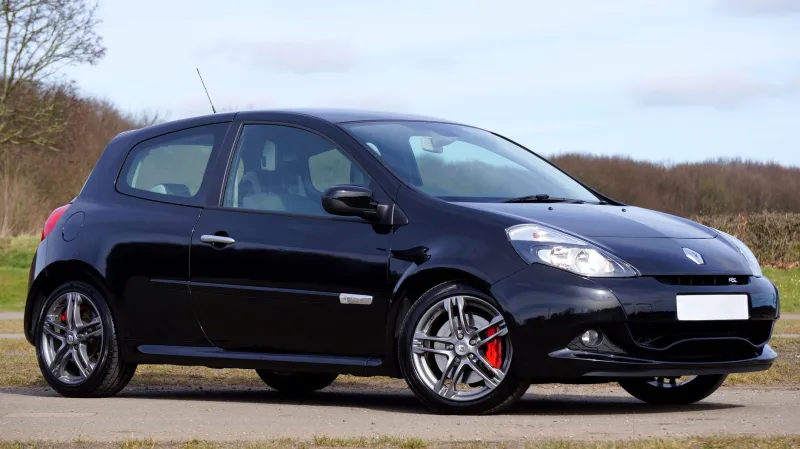
Cold Hands, Warm Tyres: Winter-Proofing a Renaultsport Clio 200 for Damp UK Circuits
There's a particular kind of quiet at a damp Bedford Autodrome on a Tuesday in February. Half the paddock is empty, the garages are free, and you'll string together more clear laps before lunch than you'd manage in a whole July day. The trade-off is obvious: single-figure temperatures, a greasy line through the slower corners, and a car that behaves nothing like the one in your summer notes.
A Clio 200 is genuinely brilliant in the cold. The F4R pulls cleanly from low down, the chassis talks to you through the wheel, and the Cup setup is stiff enough to tell you exactly what the front tyres are up to. But the setup you run in June is actively working against you in November. Here's what to change.
Winter dates are the bargain of the UK calendar
January and February slots at Bedford, Snetterton and Donington regularly go for half the price of a sunny summer day, and the atmosphere is friendlier — fewer people chasing lap records, more people just glad to be out. Use that. A cold, damp day is the cheapest car-control lesson you will ever buy, and the Clio rewards someone who drives smoothly rather than someone who drives aggressively.
Tyres: the single change that matters most
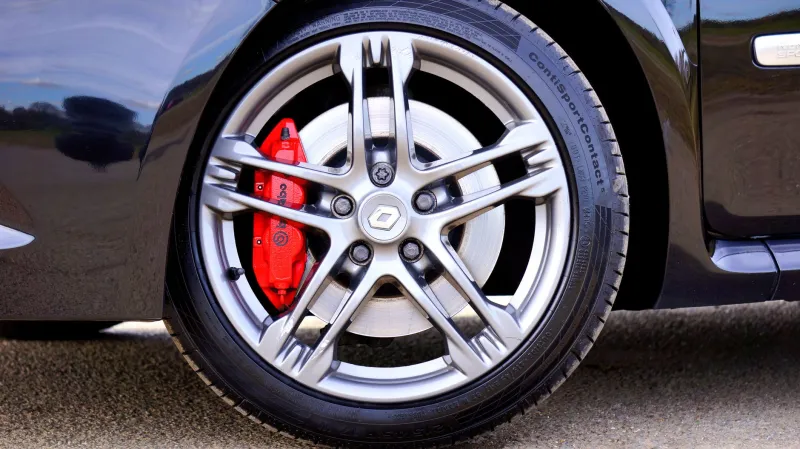
If you're still on semi-slicks in single-figure temperatures, you're not fast, you're just busy. Track rubber needs heat to work, and a damp circuit at four degrees will never generate it. Swap to a proper road tyre with real tread: a Michelin Pilot Sport 4, a Goodyear Eagle F1 Supersport, or — if you want something genuinely entertaining in standing water — a Uniroyal Rainsport.
Aim for at least 4mm of tread, ideally 5mm, and check the shoulders for cracking. On the standard 215/45R17 Clio wheel, a set of four road tyres costs less than a pair of decent track tyres, and you'll actually enjoy the day rather than tip-toeing around on cold, glassy rubber.
Pressures, but not the ones in your notebook
Dry-day notes are useless here. Start cold at around 28-29 psi front and 27-28 rear, do three or four laps, then come in and check. A damp day keeps tyre temperatures low, so you'll usually bleed far less than you expect. On road tyres, a hot target nearer 33-34 psi front is about right — noticeably lower than the 36 you'd chase in July.
Take a decent handheld gauge rather than trusting the forecourt airline, and resist the urge to drop pressures to 'find grip'. Cold tyres running too soft just roll onto the sidewall and feel vaguer still.
Geometry: dial the aggression back
A fast-road alignment with -2.5 degrees of front camber is lovely on a dry circuit. In the wet, it simply reduces the contact patch at the exact moment you need it most. Ask your local specialist for -1.5 to -1.75 degrees front camber, standard front toe or a whisker of toe-out for turn-in, and a small amount of rear toe-in — around 0.15-0.20 degrees total — to settle the back end under braking into a cold, damp corner.
It isn't a magic fix, but a stable car lets you brake later and carry more speed, which is worth more than any theoretical grip figure. If you've had a kerb knock or a pothole moment, get the alignment checked before you book anything.
Brakes: pads, fluid and a bit of honesty
Clio 200 brakes are more than strong enough for a winter day, but they don't appreciate being asked to work from cold with a full race compound fitted. A fast-road/track hybrid such as a Ferodo DS2500 or a PBS ProTrack gives bite from the first pedal and enough fade resistance for a session. Race pads on a five-degree morning are wooden for two laps, and that's two laps too many.
Fluid is the bit everyone skips. Brake fluid absorbs moisture over the year, and wet fluid boils at a lower temperature. Fresh DOT 4 or DOT 5.1 bled through before the day costs about £20 and half an hour in the garage. While the wheels are off, check pad thickness, look for scored discs and make sure the caliper sliders move freely — UK winter salt and grit do them no favours at all.
Cooling, fluids and the bits that fail in the cold
Cold air means good power, so make sure the cooling system is up to it. Coolant should be at the correct 50/50 concentration and the expansion tank shouldn't look like brown tea. Check the fan cuts in, that hoses aren't perished and that the radiator isn't half-blocked with leaves and gravel from a summer of motorway miles.
Fresh 5W-40 oil and a filter before the day, and listen for any gearbox whine on the drive there. Also cast an eye over the dampers and bushes: a Clio 200 on tired dampers feels vague and crashy in the cold, and you'll spend the whole day chasing a setup problem that is actually a worn component. A soft rear beam bush won't be fixed by pressure tweaks.
The night-before checklist
Torque the wheel bolts to around 105-110 Nm, check pressures and tread, top up fluids, empty the boot of anything that isn't bolted down, and remember the tow eye. Pack a proper tyre gauge, a small compressor, a torque wrench, a spare set of pads if you have them, and warm waterproof clothing.
And check noise limits before you book. Bedford's static test and Snetterton's drive-by meters have caught out more than one Clio with an aftermarket system, and failing scrutineering is an expensive way to spend a morning.
How to actually drive it
Two gentle laps to get heat into everything, then build. Brake in a straight line, get the car rotated before you ask for power, and short-shift out of the slow stuff where the F4R's torque will pull you clear without lighting up a cold tyre. If a Quaife ATB is fitted, be gentle on the way out of the slower corners — a cold surface and a locking diff can catch you out.
Accept that a damp track will be slower than your dry personal best. Chasing the number is precisely how people end up in the gravel at the end of the Bentley Straight.
The takeaway
The Clio 200 doesn't need much for winter: a sensible set of tyres, sensible pressures, softer geometry, decent pads and a proper look underneath. Do that, and a cold, damp day stops being a compromise and becomes the most instructive, cheapest and quietest trackday you'll do all year.