Reservoir Dogs: Keeping a Clio 182 Trophy on Its Sachs Dampers in 2026
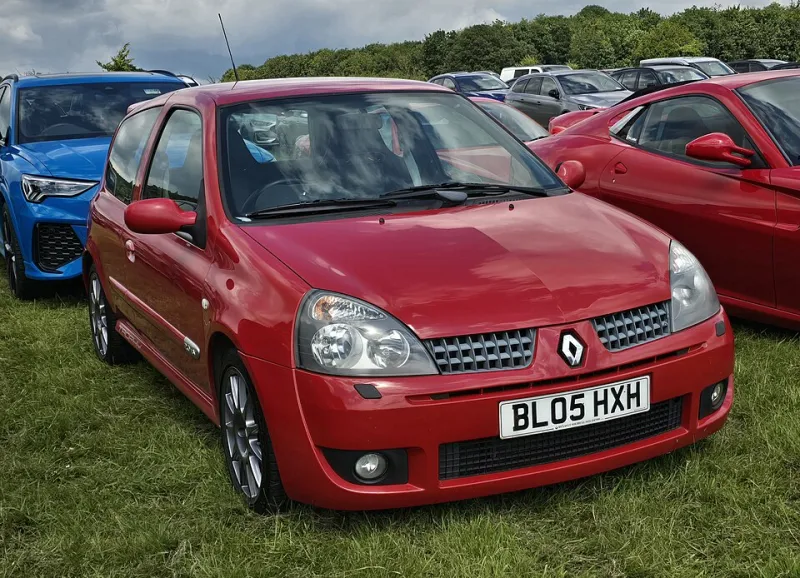
Photo: Calreyn88, CC BY-SA 4.0, via Wikimedia Commons
Of the 500 Clio 182 Trophies that landed in the UK back in 2005, a fair number are still about — and almost every one of them is sitting on a set of dampers that are now over twenty years old. That's the thing about the Trophy. The Sachs remote-reservoir units are the reason the car exists, the reason it rides British B-roads better than any other 182, and the reason your wallet is about to take a pasting.
This isn't a scare story. It's a buying and ownership guide, because the difference between a Trophy that's been looked after properly and one that's simply been kept clean is roughly the price of a second-hand hatchback.
What the Sachs units actually do
Most hot hatches of the era ran conventional fixed-rate dampers. The Trophy didn't. Renaultsport went to Sachs Race Engineering for a bespoke set with remote reservoirs, paired with unique springs and a slightly lower ride height. The result was a car that soaked up scarred tarmac without floating, and stayed composed over a kerb at Cadwell in a way a standard 182 simply couldn't manage.
That's the payoff. The problem is that remote-reservoir dampers are motorsport hardware wearing a road car's clothes. They have more seals, more hose, more places to leak, and they were never designed for two decades of potholes, salt and neglect.
The failure list
Work through these in order when you're assessing a car:
Leaking seals. A light misting around the shaft is normal and usually just an MOT advisory. A visible drip down the damper body is not — that's fluid loss, and performance goes with it.
Reservoir hoses and fittings. The flexible lines and their unions crack, weep and corrode. A split hose can dump the charge quickly, and replacing hoses on original units means the damper comes apart anyway.
Gas loss. Nitrogen charge escapes over time. The car doesn't collapse; it just goes vague, harsh over small bumps and oddly floaty at speed. Plenty of owners mistake this for worn bushes.
Bump stops and top mounts. The bump stops crumble to dust, and the front top mount bearings knock over ripples. Both are cheap in isolation, but they hide damper problems and make diagnosis harder.
Corrosion. Bodies and reservoir brackets rust, particularly on cars that have lived near the coast or spent winters outside.
What a proper rebuild costs in 2026
Budget roughly £280 to £380 per damper for a proper strip, new seals, fresh oil, nitrogen recharge and a dyno sheet showing before-and-after curves. Add around £100 a corner if you want re-valving to suit stiffer springs or a specific track. Replace the reservoir hoses while you're in there — no good paying for a rebuild and then refitting twenty-year-old rubber.
Realistically, a full four-corner refresh with hoses, bump stops and new top mounts lands somewhere between £1,400 and £1,900 in 2026, plus whatever you spend on carriage and however long you're without the car. Turnaround of three to six weeks is typical; specialists get busy before the trackday season kicks off.
Sending the units back to Sachs in Germany is an option and arguably the most faithful route, but factor in freight both ways and a longer wait. Second-hand pairs turn up for £400 to £700 with no history at all, which is a gamble rather than a saving. Genuine new old stock exists, but expect to pay handsomely and to hunt for it.
Spotting a tired or badly refurbished car
Start with the paperwork. A receipt from a recognised damper specialist, with a dyno printout, is worth ten times a receipt that just says 'suspension work'. Ask who did it and when.
Then look at the hardware. Mismatched damper bodies, fresh paint over pitted metal, non-standard hose clamps or reservoirs zip-tied out of position all suggest a bodge. Check the springs — Trophy springs are specific, and plenty of cars have been downgraded to Cup springs during a cheap refresh.
On the test drive, find a stretch of broken surface and listen. Knocking over ripples is top mounts; a secondary bounce after a compression is gas loss; a wallowy, unsettled rear over crests points at tired rears. Check tyre wear across all four — uneven shoulders on a car with correct geometry usually means the dampers aren't doing their job.
And check the ride height. A Trophy sitting noticeably high at one corner has either been reassembled incorrectly or has a collapsed spring.
Originality versus aftermarket
The honest answer is that it depends on the car. A standard, low-mileage Trophy should have Sachs units on it — that's the collector's argument, and it's a fair one. If you're buying a keeper, pay for originality and for paperwork proving a rebuild.
If you're buying to drive hard, and especially if you're doing regular trackdays, a well-regarded aftermarket kit will outperform a tired set of Sachs units for similar money to a rebuild. Bilstein, Gaz and AST all offer options, and the car will still be a Trophy underneath. Just be aware that the purist market marks non-original cars down, and that you should tell your insurer.
The worst outcome is paying a Trophy premium for a car with dead Sachs dampers and no rebuild history — you've bought the badge, not the engineering.
Living with them
Give the dampers a look every service. Clean the shafts, check the hoses, and note any change in ride quality — these units degrade gradually, so the deterioration is easy to normalise. Keep the car off salted roads where you can, and avoid pressure-washing the reservoir area. If you do trackdays, get them checked every couple of seasons rather than waiting for a failure.
A Clio 182 Trophy on healthy Sachs hardware is still one of the great French performance cars. It just needs an owner who treats the suspension as a service item rather than a permanent fixture — and who budgets for it before the first leak appears.