Featherweight by Design: Peugeot 106 Rallye Track Prep and Buying Notes for 2026
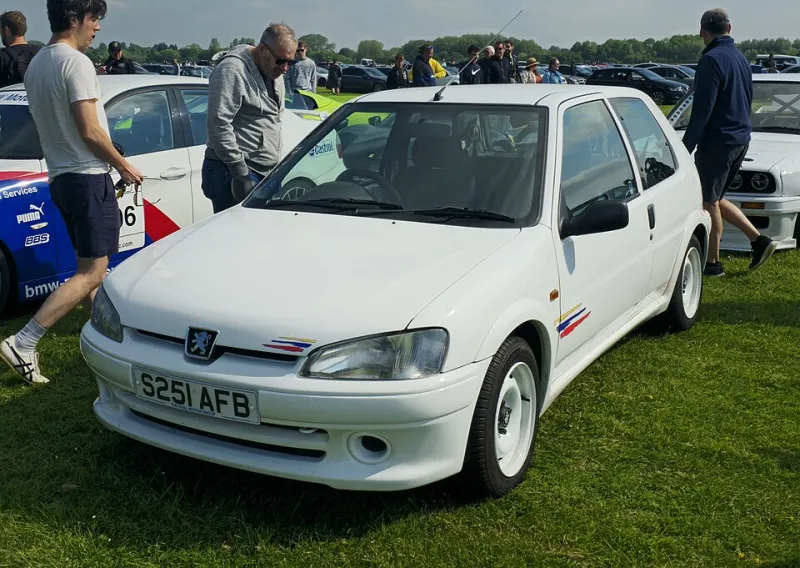
Photo: Calreyn88, CC BY-SA 4.0, via Wikimedia Commons
Modern hot hatches are brilliant, but they’re not exactly waifs. You can feel the extra safety kit, the bigger brakes, the screens and the sound deadening in every direction. That’s precisely why the Peugeot 106 Rallye still lands so well on a UK track day in 2026. It isn’t fast in a straight line by today’s standards, but it doesn’t need to be. The Rallye’s trick was always the same: keep the mass low, keep the controls simple, and let the driver do the work.
That formula hasn’t aged out. If anything, it’s become more relevant. A well-sorted 106 Rallye gives you a lesson in momentum, braking discipline and mechanical sympathy that a 300bhp hatch can quietly hide. On the right British circuit — Cadwell, Anglesey, Blyton, maybe a damp airfield day — it’s still enormous fun. The catch is that buying and running one in 2026 takes a bit more care than it did a decade ago.
Why the scales still matter
The Rallye was never about luxury. The first-generation 1.3 and the later 1.6 both leaned on a pared-back spec: manual windows, minimal trim, no heavy sound deadening, and a rev-happy little engine. The result was a car that weighed very little and felt even lighter on the road. You notice it most under braking and on turn-in. There’s less inertia to manage, so the car changes direction with a directness that modern GTIs struggle to replicate.
On track, that means you can run standard-ish power and still have a proper engagement. You’re not waiting for a turbo to spool or a dual-clutch box to decide what it wants to do. You’re working the gearbox, feeding the brakes in gently, and carrying speed. British circuits reward that. Cadwell’s woodland section and Anglesey’s coastal sweepers both suit a light car that doesn’t need huge power to feel alive.
Buying in 2026: rarity, rust and realistic money
The biggest issue in 2026 is supply. Nice 106 Rallyes are thin on the ground, and the cheap ones are usually cheap for a reason. You’ll see rough examples advertised with optimistic prices, and genuinely tidy cars commanding proper money. The days of picking one up for a grand and hoping for the best are largely gone. That doesn’t mean you need a concours car, but it does mean you should budget for a proper inspection and a contingency fund.
Decide early whether you want an S1 1.3 or an S2 1.6. The S1 has the purist appeal and the smaller engine, while the S2 gets the 1.6 and a slightly more usable torque curve. Both are light. Both are old. Neither will feel like a modern car, and that’s the point. Originality matters more than ever, but a car with sensible period modifications and a thick history file is often a better buy than a “standard” car with a crusty shell.
Structural checks before anything else
Before you get excited about the engine, get the car in the air. The 106 is a simple thing, but it corrodes in familiar places. Sills, jacking points, rear beam mounts, boot floor, inner wings, scuttle area and the base of the A-pillars all need a proper look. Lift the carpets if you can. Check the fuel lines and brake pipes. A cheap shell is rarely cheap once you start welding it.
The rear beam is a known weak point on aged Peugeots, so check for camber and toe that look off, plus any knocking from the trailing arm bearings. The rear arches and tailgate aperture can also hide rot. If the car has a sunroof, check for leaks and damp footwells. These cars are old enough that water ingress has had plenty of time to do damage.
Mechanical realities
The TU engine family is tough, but it isn’t indestructible. Look for signs of neglect: dirty oil, a weeping head gasket, tired coolant hoses and a radiator that’s seen better days. A compression test is worthwhile, and so is a proper cold start. Listen for tappet noise and check the gearbox for worn synchromesh, especially into second. The clutch cable and linkage can feel vague on a tired car, but they’re not complicated to sort.
Suspension and brakes will almost certainly need attention. Original dampers are past their best, and bushes will be tired. That’s fine — it’s part of the ownership experience — but factor it into the price. A car with fresh dampers, decent brake fluid and good tyres is worth more than one that merely looks tidy on the outside.
Track prep that respects the recipe
The temptation is to over-tyre and over-brake a light car. Resist it. A 106 Rallye doesn’t need huge brakes or sticky track rubber to be fun. Fresh high-quality brake fluid, decent pads and standard discs in good condition are a sensible start. Quality road-biased track tyres will give you more feedback and less grip than a full slick, which suits the car’s balance and keeps the load on the ageing shell lower.
Dampers and bushes make a bigger difference than power. A set of quality replacement dampers, new top mounts and a careful geometry check will transform how the car feels. Polybushes can tighten things up, but don’t go mad everywhere — the standard rubber is part of the compliance that makes a 106 work on British B-roads. A bucket seat and harness are a sensible safety upgrade if you’re doing regular track days, and a half cage is worth considering if you plan to push on. Just check the noise test before you book. A stripped-out 106 with a loud exhaust can fail a static test at some venues, and drive-by limits are getting stricter.
UK realities in 2026
Running a 106 Rallye in the UK is not quite the bargain it once was, but it’s still manageable. Parts availability is good through specialists and the owner community, though some trim and body panels are getting harder to find. Insurance for a modified car needs declaring properly, and agreed-value policies are worth exploring if the car is tidy. MOT history is your friend when buying — check for repeated corrosion advisories.
London’s ULEZ is another consideration. A 106 Rallye isn’t old enough for the historic vehicle exemption yet, so if you live inside or regularly visit the zone, factor the charge in. For most owners outside the capital, it’s a non-issue, but it’s part of the broader picture of running an older car in 2026.
The verdict
The Peugeot 106 Rallye still works because it asks more of you and gives more back. It’s not a modern hot hatch, and it shouldn’t be treated like one. Buy a sound shell, keep the engine healthy, prep the brakes and suspension sensibly, and resist the urge to over-build it. Do that, and you’ve got a track car that teaches you more in a lap than most modern machinery manages in a whole day.