From Lap Times to Licence: Taking a French Hot Hatch into 2026 Grassroots Competition

Photo: Pieter Bruegel the Elder, Public domain, via Wikimedia Commons
There is a moment in every track day when the chequered flag feeling wears off and you start wondering how you would fare against the clock. Not just another session, not just another lap of pretending the tyres are not going off — actual competition. In 2026, the UK grassroots scene is still one of the most accessible in Europe, and a French hot hatch remains one of the smartest ways into it.
You do not need a trailer, a race licence and a spare engine to get started. You do need to understand the paperwork, pick the right discipline and resist the urge to build a car you cannot afford to run. Here is the practical route from trackday regular to club-level competitor.
First, the paperwork nobody warns you about
Competition in the UK is governed by Motorsport UK. For most club-level sprints, hillclimbs and AutoSOLO events, the entry point is the RS Clubman licence. The application is straightforward, but do not leave it until the week before your first event. You will need to join a Motorsport UK-registered club, complete the licence application and, depending on the discipline, satisfy medical and declaration requirements. Some clubs run taster sessions or non-competitive runs that let you sample the format before committing.
Read the supplementary regulations for every event. They are not glamorous, but they tell you the class structure, noise limit, scrutineering times and safety requirements. Turning up with the wrong paperwork is the most avoidable way to waste an entry fee.
Pick your battlefield
Sprints and hillclimbs are the natural next step for a track day driver. You run alone against the clock, usually over one or two laps or a short hill, with plenty of time between runs to check tyres and talk nonsense in the paddock. Venues such as Curborough, Loton Park, Harewood, Prescott and Shelsley Walsh are part of the fabric of British motorsport, while sprint programmes at circuits like Blyton and Cadwell Park offer a gentler introduction to timed running.
AutoSOLO is cheaper and more informal. It is a cone-based discipline held on smooth tarmac, often at airfields or large car parks, and it rewards precision over power. For a light French hatch, it is an excellent school for braking points and car control. If you are nervous about scrutineering or speed, start here.
Class eligibility is where French hatches shine
Most club events run road-going production classes, modified production classes and specialist categories. A standard Clio 182, Saxo VTS or 205 GTI can usually slot into a road-going class with minimal modification. That is the appeal: you are not building a silhouette racer, you are competing in something recognisable.
Be honest about modifications. A stripped interior, a cage, altered suspension geometry or a non-standard engine can push you into a faster class where the opposition has deeper pockets. The best first season is usually spent in the least modified class your car qualifies for. Learn the format, learn the tyres and learn how to prepare the car consistently before chasing a trophy.
Safety prep: enough, not everything
Scrutineers are not ogres, but they do have a checklist. For sprint and hillclimb use, expect to need a suitable helmet, fire extinguisher, battery isolation where required, secure seats and harnesses, and a car free of loose trim. Hillclimbs often demand more rollover protection than sprints, so check the regulations before drilling holes.
Do not overlook the boring stuff. A properly mounted extinguisher, a clearly marked tow point and a clean engine bay say more about your preparation than a boot full of stickers. Noise testing is another hurdle — a tired exhaust on a modified 205 GTI can fail a 98dB limit before you have even reached the start line.
The realistic costs
A first season does not have to cost the earth. Budget for a club membership, an RS Clubman licence, safety gear and entries. A helmet and FHR device will be the biggest initial outlay if you do not already own them. Event entries typically sit in the low hundreds of pounds per day, and travel, fuel and tyres add up quickly.
A sensible target for a first season of eight to ten club events is somewhere between £1,500 and £3,000, assuming you already have a sound car and do your own spannering. That is still cheaper than most forms of circuit racing, and you can sleep in your own bed.
Which French hot hatch makes sense in 2026?
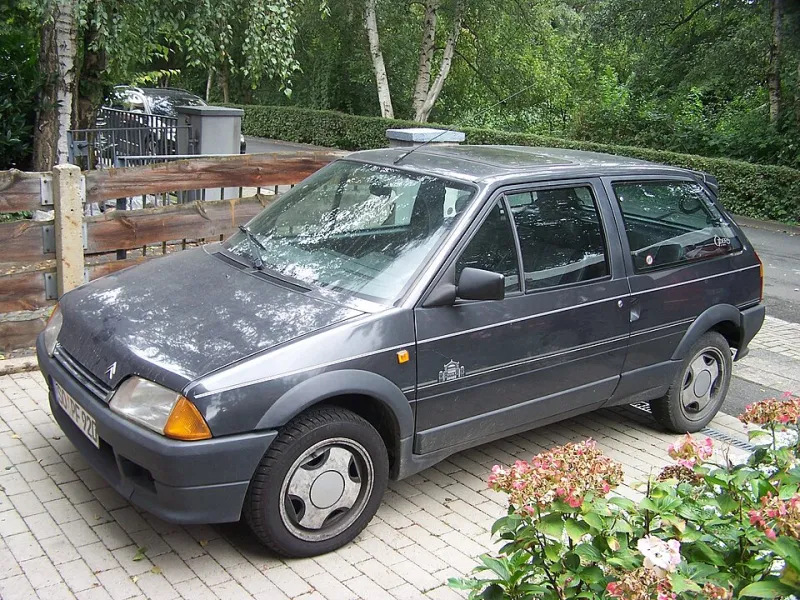
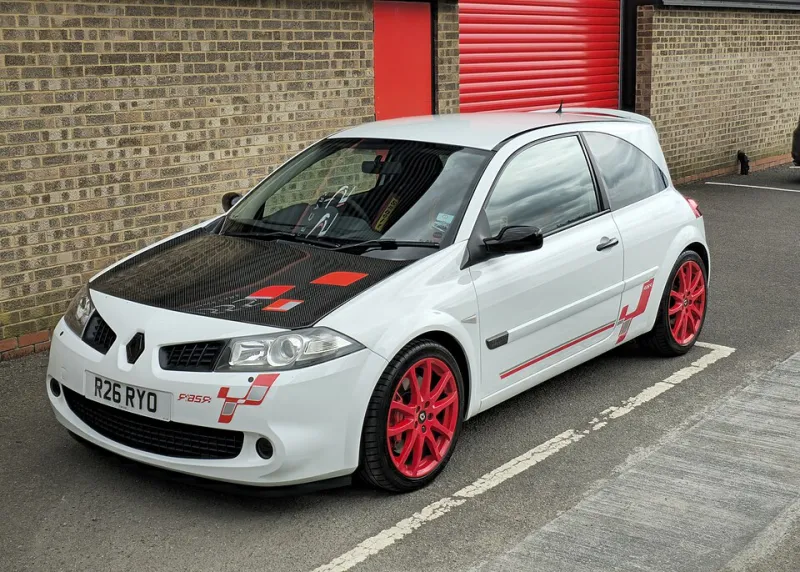
The Clio 182 is the default answer for good reason. It is fast enough to be fun, simple enough to work on and well supported by specialists. A 205 GTI is more charismatic but values have climbed, and finding a sound shell is harder than finding a fast one. The Saxo VTS and 106 Rallye are brilliant budget options if you can find an unrotten example, while the Twingo 133 is underrated and still relatively affordable.
Whatever you choose, resist the urge to over-build it. The best grassroots French hot hatch is the one that starts every time, passes scrutineering and leaves you enough budget to enter the next event.
The first step
Do one more track day. Then enter an AutoSOLO or a club sprint. Talk to the organisers, ask stupid questions and accept that your first event will be a learning curve. In 2026, the timing beam is waiting — and a well-sorted French hatch is still one of the most entertaining ways to chase it.