The Paperwork Says Historic: Running a French Hot Hatch Through 2026's MOT Exemption
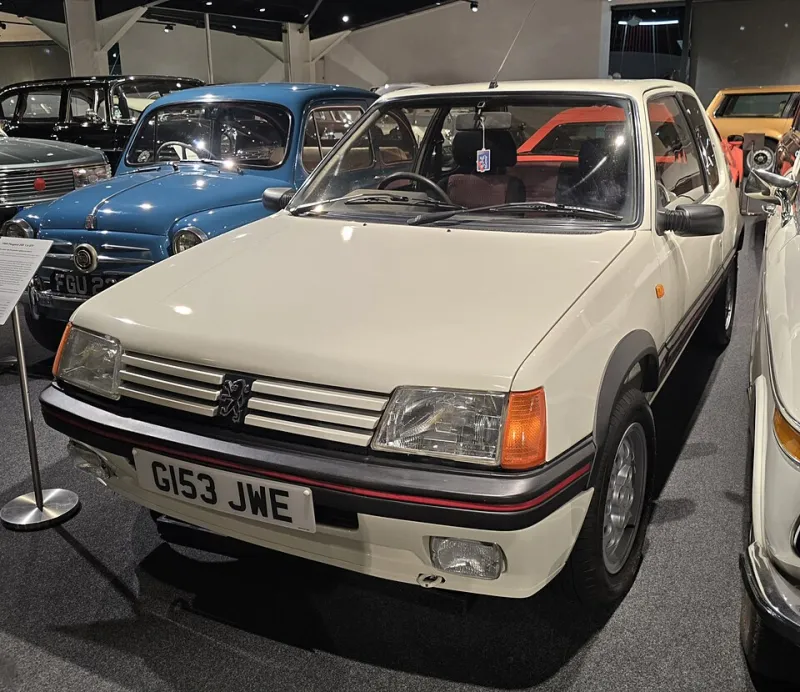
Photo: Calreyn88, CC BY 4.0, via Wikimedia Commons
Every year the UK's rolling historic vehicle rules creep forward, and every year a fresh group of French hot hatches slides into that strange administrative limbo called MOT exemption. In 2026 the line moves into 1986 registrations, which means more Peugeot 205 GTIs, Renault 5 GT Turbos and other Eighties favourites can be declared Vehicle of Historic Interest and taken off the annual test. The appeal is obvious: no MOT, historic tax class, cheaper classic insurance. The trap is just as obvious: none of that makes a 40-year-old hot hatch any less tired, any less rusty or any less capable of eating its own brakes on a damp B-road.
What changes - and what does not
As the 40-year threshold rolls forward in 2026, more cars become eligible, but eligibility is not automatic. You still need to tax the car in the historic class and declare it VHI. The MOT disappears from the diary; the need for inspection does not. An exempt car can still be stopped by police, still be examined if it looks unroadworthy, and still fail an insurance assessor's idea of safe. The annual test is a minimum standard, not a maintenance plan, and removing it from the calendar simply moves responsibility onto the owner.
The VHI rulebook in plain English
VHI is the bit people skim. The vehicle must be over 40 years old and must not have been substantially changed in the last 30 years. DVLA's definition of substantial change is broad: replacing a chassis or monocoque, fitting a different body shell, changing suspension or steering type, or swapping to an engine type that is not period-appropriate can all take a car out of scope. Period-style modifications, sensible upgrades and like-for-like repairs are generally fine; a modern turbo engine and a cut-and-shut shell are not. Keep receipts, photos and a clear modification list. If the car has been reshelled or converted, check the V112 guidance before ticking the exemption box.
The cars crossing the line
The Peugeot 205 GTI is the headline act. Late 1.6 and early 1.9 cars are now in range, and values have long since left banger territory. A good one is a £12k-£20k car in 2026, which makes agreed-value insurance and secure storage part of the ownership cost. The Renault 5 GT Turbo is the other obvious candidate: a carburetted turbo hot hatch with enormous character and a well-known appetite for heat soak, boost leaks and bodged tuning. Many have been modified, so VHI status needs checking carefully. Other French performance cars from the mid-Eighties - Renault 11 Turbo, Citroen BX GTI, early 309 GTIs - are either in range or close, depending on registration date. The rule is about the individual car's age, not the model's launch date.
Insurance and safety
MOT exemption can make insurance more awkward, not less. Some classic policies ask for an MOT, an independent inspection or photographic evidence of condition. Others are fine with VHI but want the car garaged and mileage-limited. Tell the insurer about every modification, including the ones you think are invisible. Agreed valuation is worth the hassle on a 205 GTI; a market-value policy will not replace a rotten-but-original car with a good one. Trackday cover is separate, and most track insurers will still want to know the car is sound.
Then there is safety. A 1986 hot hatch has no ABS, no airbags and no ESP. It has 1980s brakes, 1980s lighting and usually 1980s wiring. In 2026 traffic that is a real difference. Check brake flexis, fluid, pads and discs; look at tyre date codes even if the tread is deep; inspect fuel lines, cooling hoses and the battery clamp. Rust is the big one: sills, jacking points, rear beam mounts, inner wings, boot floors and windscreen surrounds. A car that sailed through its last MOT in 2025 can still be structurally soft in 2026.
The owner-MOT habit
Treat exemption as a prompt to do a proper annual inspection, not to skip one. Once a year, get the car on a ramp and check the stuff the MOT tester used to check for you: lights, brakes, steering play, suspension bushes, ball joints, wheel bearings, corrosion and fluid leaks. Change brake fluid every couple of years, keep the cooling system fresh and do not ignore small noises. On a 205 GTI, the cambelt and rear beam are not optional maintenance. On a Renault 5 GT Turbo, carburettor condition and boost control are part of the safety case, not just the tuning menu.
If you use the car on track, add a pre-trackday check: pads with meat left, fresh fluid, correct tyre pressures, no play in the hubs and a proper look at the suspension. An exempt car can still do a Bedford trackday; it just needs to be prepared like a track car rather than presented like a museum piece.
The verdict
MOT exemption is a nice administrative break and a genuine help for low-mileage classics. It is not a restoration certificate, a safety audit or a licence to ignore maintenance. The French hot hatches crossing the line in 2026 are now old enough to be historic and fast enough to still be fun. Keep them that way with spanners, not paperwork.