Stripped to the Studs: A 2026 Owner's Guide to the Clio 172 Cup
The Clio 172 Cup has always been the awkward one. It arrived in 2002 as a homologation-flavoured special, and in 2026 it remains the closest thing Renaultsport ever built to a road-legal go-kart. No ABS. No air conditioning. No traction control. Just a 2.0-litre F4R, a close-ratio gearbox and a kerb weight that starts with a one. That spec reads like a recipe for track-day purity, but living with one on British roads and circuits takes a certain temperament.
What Makes the Cup Different
Compared with the standard 172, the Cup dropped weight rather than added kit. Renaultsport binned the ABS, aircon and some sound deadening, then fitted stiffer springs and dampers, a thicker front anti-roll bar and lighter 15-inch alloys. The result was a car that traded comfort for response. In 2026, that trade-off is the whole point. You feel the surface through the steering wheel, you hear the stones hitting the arches, and you learn to brake with your fingertips rather than your foot.
The Cup also came with a slightly wider track and a quicker steering rack than the cooking 172, which makes it feel almost hyperactive on a B-road. It is not a relaxing car. It is a car that demands attention, and that is exactly why people still seek them out.
The No-ABS Reality on UK Tarmac
Driving a car without ABS on British roads is not a novelty — it is a skill. In the dry, the Clio's lack of servo-assisted electronic interference is fine. The pedal is firm, the bias is predictable, and you can modulate the brakes yourself. In the wet, it is a different story. Locked fronts are easy to find if you stab the middle pedal, and the rear can step out under trail braking if you are clumsy.
The upside is that you learn to brake properly. You learn to squeeze, to feel the tyres, and to leave a bigger margin. On track, that translates into smoother inputs and better lap times once you stop relying on the safety net. On the road, it translates into a car that feels alive in a way that modern hot hatches simply do not.
Buying Checks: The Usual Suspects
The Clio II platform is tough, but it is not immune to rust. Check the rear arches, sills, jacking points, boot floor and the scuttle area under the windscreen. Cup cars are now old enough to have been welded, and some repairs are better than others. Take a magnet and a torch.
Mechanically, the F4R engine is strong but needs evidence of care. Cambelt and auxiliary belt history is essential — the interval is five years or 72,000 miles, whichever comes first, and a snapped belt writes off the engine. Listen for a rattly dephaser pulley on cold start, and check for oil leaks around the rocker cover and sump. The JC5 gearbox can whine or crunch into second, so a test drive should include a few quick shifts when warm. Driveshafts, wheel bearings and engine mounts are all wear items.
Suspension is where the Cup earns its keep. Worn bushes, ball joints and track rod ends will ruin the steering feel. Check the rear beam for play and the dampers for leaks. Cup-specific dampers are getting harder to find, so factor that into your budget if the car still has originals.
Keeping It Reliable Without Softening It
Reliability in a 172 Cup is mostly about prevention. Use a quality 5W-40 oil, change it regularly, and keep an eye on coolant levels. The cooling system is marginal on track, so a fresh radiator, thermostat and fan switch are sensible. The heater matrix is a known weak point — if the windows mist up and refuse to clear, that is a clue.
Parts availability is a mixed picture in 2026. Service items are easy: filters, belts, brake discs and pads are all available from Renault specialists and motor factors. Cup-specific trim and suspension parts are thinner on the ground. Join the owner groups, set up saved searches on eBay, and do not be too proud to buy a donor car if the price is right.
Do not fall into the trap of 'upgrading' everything. A standard Cup with fresh bushes, a proper alignment and good tyres is a brilliant thing. Polybushing every joint will add noise and harshness without necessarily making it faster.
Sensible Upgrades That Don't Dilute the Recipe
The first upgrade should be brake fluid and pads. A high-temp DOT 4 fluid and a set of fast-road or track-biased pads will transform confidence without altering the car's character. Check the hard brake lines for corrosion — with no ABS, a burst line is a very direct problem. Stainless lines are a worthwhile safety upgrade.
Tyres matter more than anything else. The Cup's 15-inch wheels give you a wide choice of 195/50 R15 rubber, from sticky track-day tyres to proper road rubber. Do not over-tyre it. A car with modest grip and a predictable breakaway is more fun than one with huge grip and a sudden limit.
Seats and harnesses are a personal choice. A fixed-back seat and a harness will hold you in place, but only fit a harness with a proper roll bar or cage — otherwise you are compromising safety. For most owners, a standard seat with a good bolster and a CG-Lock is enough.
The Aircon Question
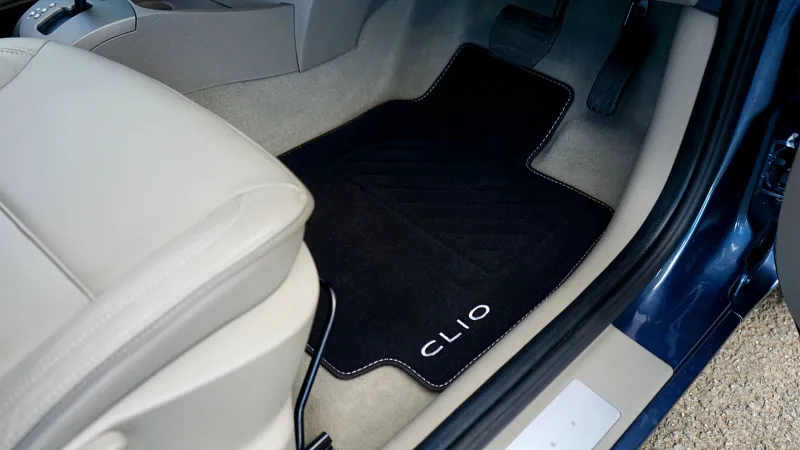
There is no aircon, and there is no easy way to add it. The Cup's heater is basic, and the blower motor is not powerful. In a UK summer, that is fine. In traffic on a hot day, you will sweat. The upside is weight and simplicity. The downside is demisting. Make sure the heater matrix and blower resistor are working properly, and keep a microfiber cloth handy.
Track Day Practicalities
Noise tests are the first hurdle. A standard Cup should pass most UK track-day limits, but an aftermarket exhaust can push you over. Check the static limit at your chosen circuit before booking, and consider a decibel insert if you are close.
ULEZ is another consideration. Early 172 Cups are unlikely to meet Euro 4 emissions standards, so check the London ULEZ rules before you plan a city trip. For track days, most circuits are outside the zone, but it is worth knowing.
Finally, insurance. Modified and classic policies are available, but be honest about the specification. A Cup with a cage, buckets and a stripped interior is not a standard car, and insurers will treat it accordingly.
The Verdict
The Clio 172 Cup is not a car for everyone. It is noisy, basic and demanding. But in 2026, it is still one of the purest French track-day fixes you can buy. Keep it maintained, respect the lack of ABS, and resist the urge to soften it. The rawness is the point.