Matching Numbers, Sharing Parts: A UK Owner's Guide to the French Performance Parts Bin
Photo: Ocirne94, CC BY-SA 3.0, via Wikimedia Commons
There's a particular satisfaction in walking up to a parts counter, quietly quoting an original equipment number, and watching the price fall by a third. French performance cars are unusually good for this. PSA and Renault spent thirty years building everything from superminis to hot hatches out of the same boxes of components, and the aftermarket has never been entirely honest about how much of that sharing still applies.
This isn't about fitting cheap tat. It's about understanding that a bearing is a bearing, a sensor is a sensor, and the badge on the box rarely tells you who actually made the thing inside it.
Why the parts bin is your friend
The logic is simple. When a manufacturer builds a 106 GTI and a Saxo VTS, or a Clio 172 and a Clio 182, the vast majority of the bill of materials is identical. The differences are in calibration, trim, springs, dampers and the occasional manifold — not in the oil filter.
That means two things for a UK owner. First, service parts can be bought on the cheaper of the two part numbers. Second, and more importantly, you can often buy the original equipment supplier's version of a dealer part for half the money: Valeo, Sachs, SKF, INA, Gates, Dayco, TRW and Delphi all supply the same factories that build the cars.
The PSA family tree
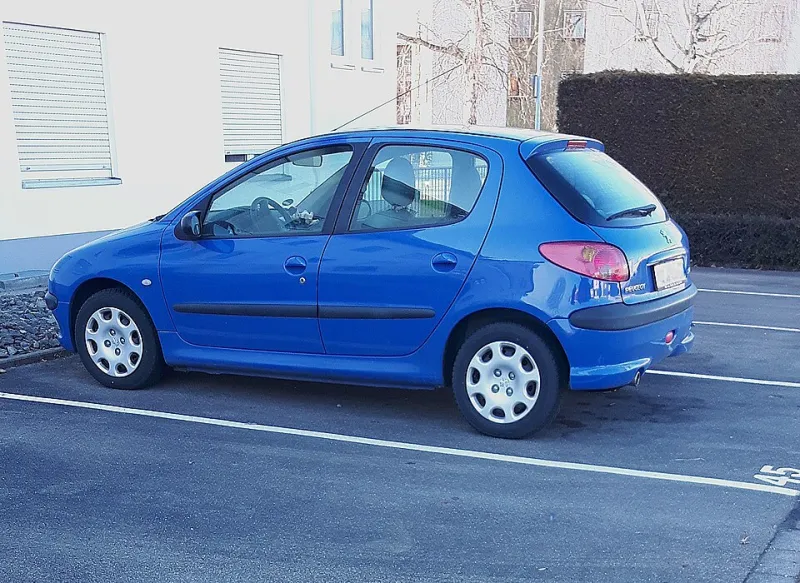
The clearest example in the French performance world is the 106 GTI and the Citroen Saxo VTS. Underneath they are effectively the same car: same floorpan, same TU5JP4 engine family, same MA5 gearbox, same brake architecture. Clutches, driveshafts, wheel bearings, brake components, suspension bushes and rear beam parts cross over freely, and the days of paying a premium because a listing says 'GTI' are over if you know what to search for.
The 306 GTI-6 sits in a more complicated place. The XU10 engine family and the BE-series gearbox stretch back through the 205 era, and a lot of internals and service parts are shared across that lineage, but the GTI-6's six-speed is its own beast in several respects. Treat gearbox internals as specialist territory and don't assume a part that fits a 306 XSi will fit the six-speed car.
The C2 VTS is worth a mention too. Its TU-series engine shares service items with the 106 and Saxo, but management, ancillaries and some sensors moved on. Buy engine service parts on the C2's own number and you won't go far wrong.
Renaultsport: same engine, different attitude
The F4R family is where most people get caught out. The Clio 172 and 182 use closely related versions of the same 2.0-litre, and plenty of parts — coils, sensors, filters, gaskets, some mounts — interchange. But the cambelt and auxiliary belt layout differs between variants and, critically, the later Clio 197 and 200 F4R runs a chain rather than a belt. Listings advertising an 'F4R cambelt kit' that claim to cover 172, 182, 197 and 200 in one go are either wrong or deliberately vague.
The Megane 225, 230 and R26 share their F4Rt long block, so consumables and many ancillaries swap across the range. Differences tend to sit in the mapping, the differential and the cooling package rather than the bits you replace every year.
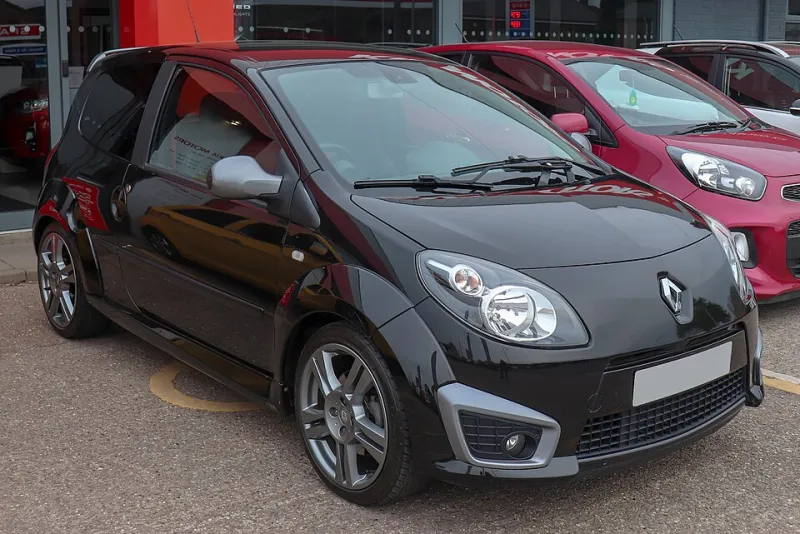
And down at the small end, the Twingo 133's K4M shares filters, coils, sensors and plenty of service items with lesser Twingos and Clios. That's a big part of why running one is so cheap.
What genuinely swaps
A rough guide to the safe end of the pool, always subject to a VIN check:
- Oil filters, sump plugs and washers, air and cabin filters within the same engine family.
- Coil packs, lambda sensors, coolant temperature sensors and thermostats, where the connector and resistance match.
- Clutch kits where engine, flywheel type and gearbox are identical.
- Brake pads where the caliper is the same, even if the car wears a different badge.
- Wheel bearings, drop links, anti-roll bar bushes and exhaust gaskets within a platform family.
- Gearbox oil to the manufacturer's specified grade — Renault and PSA both have their own preferences, and getting this wrong is a false economy.
What absolutely does not
- Brake discs. Matching diameter means nothing if the offset and bell height differ. A disc that sits 5mm out will destroy a caliper and possibly a wheel.
- ECUs, immobilisers and body computers. Even within the same model year these are coded, matched and frequently revision-specific.
- Gearboxes across families. A JB3 or JC5 from a Clio 172 will not bolt to a TL4-equipped 197, and driveshaft splines and lengths differ accordingly.
- Clutches where the flywheel differs. Dual-mass versus solid is a hard stop.
- Driveshafts. Length and spline count vary with gearbox and differential, and a 'close enough' shaft will fail at the worst moment.
- Suspension. Cup and non-Cup dampers and springs are different rates and lengths. So are 197 and 200 geometry parts.
- Airbags, pretensioners and anything pyrotechnic. Never buy used. Ever.
Spotting a misleading listing
A few habits will save you real money.
First, be suspicious of any listing claiming to fit four different models across a decade. It's almost always a description written by someone optimising for search results rather than fitment.
Second, check that the part number in the description matches the number on the box in the photograph. Sellers routinely use a stock image of a genuine part and ship something else.
Third, treat 'OE quality' as meaningless unless a brand is named. It is not a standard; it's a phrase. If the listing won't tell you who made it, assume nobody did.
Fourth, cross-reference. Renault numbers typically follow the 77 11 pattern and PSA numbers vary by era, but both can be checked against the original equipment manufacturer's own catalogue. If a Valeo or SKF listing gives a different reference for the same application, dig deeper before you buy.
Finally, buy from a specialist who asks for your registration or VIN before taking payment. That single question separates a parts professional from a box-shifter.
The dealer isn't always the enemy
One last thing worth saying: for small items — clips, bolts, seals, retaining springs, one-off hoses — the main dealer is often the cheapest and fastest route, and the parts counter will usually print you a diagram for free. The parts bin works both ways. Use the aftermarket where it's genuinely the same component, and use the manufacturer where a two-pound clip will save you an afternoon of swearing.
Get that balance right and a French performance car is one of the cheapest enthusiast propositions in Britain.