Hitched or Driven: Is a Trailer the Right Move for Your French Track Car in 2026?
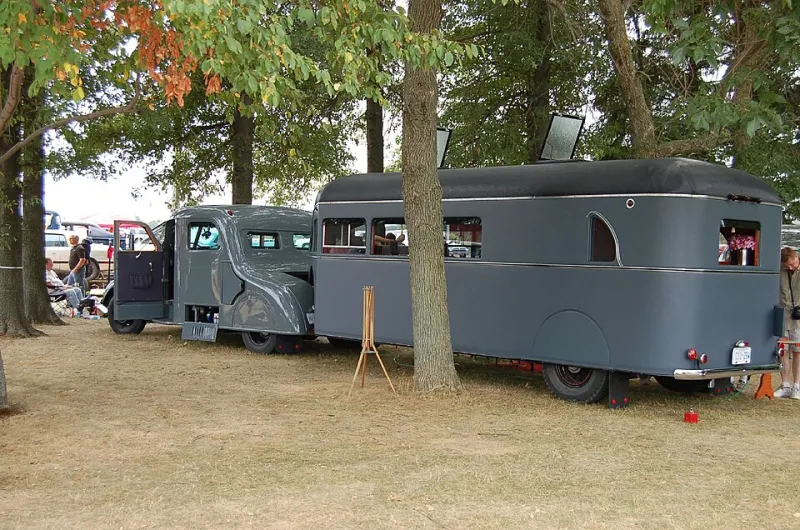
Photo: Joe Ross from Lansing, Michigan, CC BY-SA 2.0, via Wikimedia Commons
The romantic version, and the real one
Every track day paddock has the same three groups. There is the bloke in the Clio 182 who drove an hour and a half, emptied the boot of tools and tyres, and got on with it. There is the bloke with the trailer, who arrived calm, unloaded in nine minutes and had a coffee going before the briefing. And there is the bloke who drove a stripped, caged 205 GTI two hundred miles on a hot day and spent the first session worrying about the gearbox rather than his braking points.
The trailer is a lifestyle decision dressed up as a practical one. Sometimes it genuinely is practical. Sometimes it is £4,000 of hardware and a second car on the drive, all so you can avoid a drive you secretly quite enjoy. Working out which camp you are in takes an afternoon with a calculator and a bit of honesty.
What the hardware actually costs before you move an inch
A used, sound, braked flatbed or covered trailer for a small hatch is going to be somewhere between £1,500 and £4,000 in 2026 depending on age, brand and whether the previous owner has kept on top of the wheel bearings. Anything much cheaper is usually a project, and a trailer project is one of the least rewarding projects available to humanity.
Then a tow bar, properly wired, with a dedicated loom rather than a scotch-lock bodge: £450 to £800 fitted on most sensible tow cars. Then somewhere to keep it, because a 4.5-metre trailer does not fit neatly beside a modern semi. Drive space is free if you have it; rented storage is typically £300 to £700 a year and often more inside the M25.
Add the boring bits nobody budgets for: a spare wheel and a jack for the trailer, ratchet straps that are not frayed, a set of wheel chocks, a hitch lock, and a lighting board if the trailer is uncovered and you would rather not have your track car's rear lights exposed to a gritter.
The tow car maths nobody enjoys
This is where most plans quietly die. You need a car with a decent kerb weight, a towing limit that comfortably exceeds the loaded trailer, and enough grunt to hold 60mph up a long drag without the temperature gauge doing gymnastics. A 1.6 diesel estate with a 1,500kg limit is not going to cut it with a braked trailer carrying a caged Clio.
Most people end up with a large diesel estate, a van or a pickup. A van is arguably the smartest answer because it doubles as a garage and a hotel, but it is also a second vehicle that costs tax, insurance, tyres and servicing whether you use it or not. The old caravanning rule of thumb about keeping the trailer under roughly 85 per cent of the tow car's kerb weight is not law, but it is not a bad instinct either.
Watch nose weight, too. Most hitches are rated between 50kg and 75kg, and loading a car with its engine too far forward will have you over that figure without realising it. A cheap nose weight gauge is the best tenner you will spend on the whole enterprise.
Licence, plating and paperwork
Good news for most readers: since late 2021, a standard category B licence covers towing up to a combined maximum authorised mass of 3,500kg, which is enough for a small braked trailer and a light hatch on a suitable tow car. If you passed before 1997 you already have B+E and can ignore all of this. If your combined plated weights creep past 3,500kg, you need the B+E entitlement, and driving without it is the sort of thing insurers enjoy discovering after a claim.
Trailers over 750kg need their own brakes, a breakaway cable and, on newer kit, type approval and a plate. Check the plate matches reality. Insurance on the tow car usually provides third-party cover for the trailer, but comprehensive cover for the trailer itself and for the car being carried is a separate conversation. If your track car is SORN, it still needs to be insured or stored off the public road, and it must not be left on a trailer in a lay-by while you queue for a burger.
When the trailer clearly earns its keep
- The car is not road legal. No MOT, no tax, no plates, big cage, no lights. Trailering is the only option, and it is cheaper than building a second road-legal car.
- The car is valuable or irreplaceable. A standard 205 GTI 1.9 or a Clio 182 Trophy that has never been welded is worth protecting from a motorway stone chip, let alone a breakdown.
- Distance. Anything beyond about two hours each way starts to tilt towards the trailer, particularly if you are chasing noise-limited circuits like Bedford or Goodwood that demand an early start.
- You are carrying a lot. Two sets of wheels, a jack, tools, fuel cans, a gazebo. A trailer means none of that lives in the car with you.
- You cannot afford to break it. If a driveshaft lets go at 4pm, a trailer means you still get home. A driven car means recovery, a miserable train and a very long week.
When it is just expense
If your car is taxed, MOT'd, insured, reasonably civilised and the circuit is 90 minutes away, the trailer is usually solving a problem you do not have. A Saxo VTS, a 206 GTi 180 or a standard 172 Cup will happily do the trip, and driving there and back is part of the experience. You learn the car, you learn the roads, and you save the best part of five grand.
There is also the less discussed cost: a trailer makes you lazy about preparation. Cars that are driven to circuits tend to be maintained to a higher standard because the owner knows a failure means a very long walk.
A rough rule
If the car is worth more than about £8,000, is modified beyond road legality, or lives more than 100 miles from your regular circuits, the trailer starts to look sensible. If none of those apply, spend the money on brakes, tyres and instruction instead, and enjoy the drive home with your ears ringing.