Ninety-Five and Sorry: What Supermarket Unleaded Really Does to a Mapped French Hot Hatch

Photo by Photo by Intrepid on Unsplash on Unsplash
The forecourt dilemma
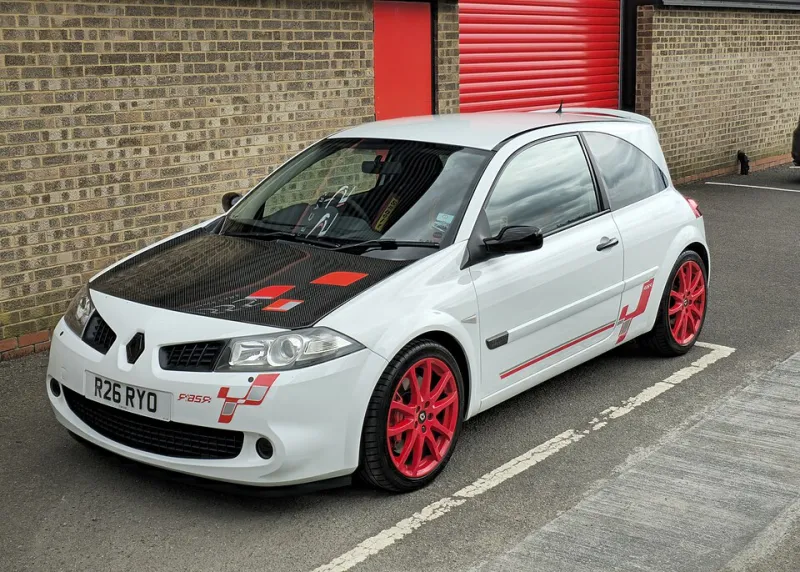
You are on the A14, the light is on, and the choice is a branded station at 168.9 for 99 octane or a supermarket at 154.9 for standard unleaded. On a standard car this is a philosophical question. On a mapped Clio 200, a Stage 1 Megane R26 or a boosted 208 GTi, it is a mechanical one.
There is a persistent belief in owners' groups that modern ECUs are clever enough to cope with anything, so the cheap stuff is fine. That is half true, and the half that is untrue is the expensive half.
What the knock sensor is actually doing
Knock is detonation: the fuel and air charge igniting early and unevenly rather than burning smoothly from the spark plug outwards. It hammers the pistons, rings and head gasket, and on a turbocharged engine with a small, hot combustion chamber it can hole a piston in seconds under the wrong conditions.
The ECU listens for it constantly. When it hears knock, it retards ignition timing, and on some cars it also enriches the mixture and reduces boost. You feel it as a car that has gone flat and hesitant, particularly in the mid-range and on a hot day. The engine is protecting itself, which is nice, but it is protecting itself by giving away the performance you paid a mapper to unlock.
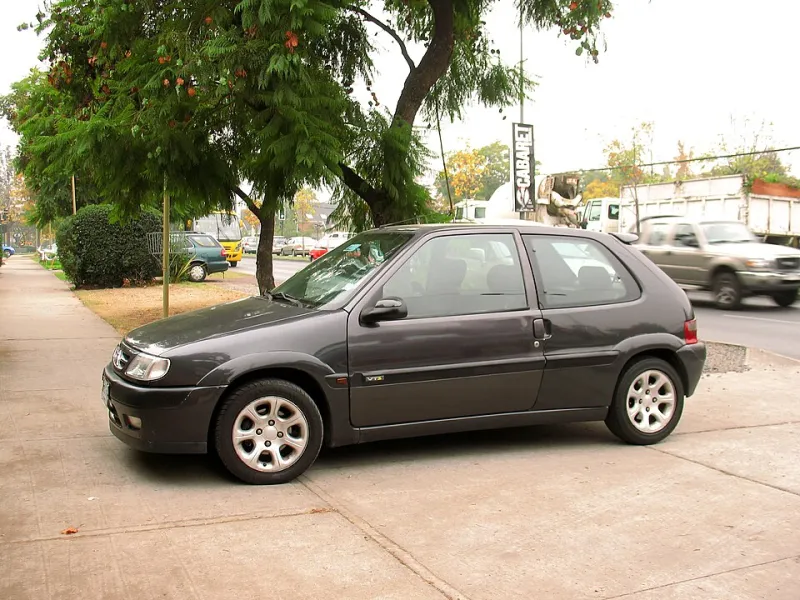
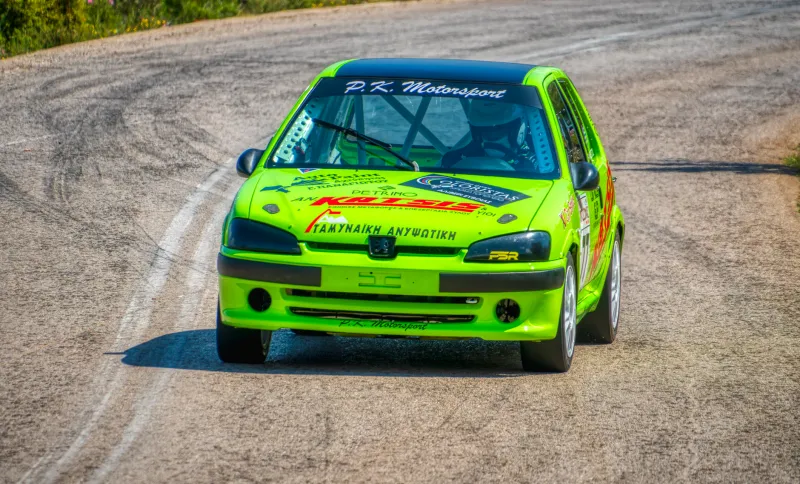
On a naturally aspirated car like a Saxo VTS or a 106 GTI, the margin is smaller and the consequences slower to arrive, though sustained knock still damages ring lands over time. On anything with a turbo, the margin is the difference between a strong engine and a rebuild.
95 RON, 97 RON and the E10 wrinkle
Since E10 became the standard grade in 2021, most UK forecourts offer E10 95 RON as the cheap option and an E5 super unleaded at 97 to 99 RON as the premium. Tesco Momentum 99, Shell V-Power, Esso Synergy 99 and BP Ultimate all sit in that bracket and are broadly interchangeable for the purposes of knock resistance.
Ethanol itself is not the villain here. It has a higher octane rating than petrol and a cooling effect on the charge, which is why E85 mapping is popular in some circles. The issue for older French cars is material compatibility: fuel lines, seals and, on some cars, the tank and pump components on 1980s and early 1990s machinery may not enjoy long-term exposure to higher ethanol content. For a 205 GTI doing 2,000 miles a year on super unleaded, this is a non-issue. For a car laid up for six months with E10 sitting in the system, it is worth thinking about.
What mapping does to the margin
A standard map is written with a fat safety margin so the car can run on the worst fuel in the market it was sold into. A performance map takes that margin and spends it on ignition advance and boost. Some mappers will tell you their file is written for 97 RON minimum, and they are not being difficult. They are telling you the timing figures assume it.
If you run a 97-minimum map on 95, the ECU will pull timing to save itself. You will not get a bang and a cloud of smoke. You will get a car that is slower than standard in the mid-range, hotter exhaust gas temperatures, and, over months, a slow accumulation of wear. On track, where coolant and oil temperatures are already high and the intercooler is doing its best with 30-degree ambient air, the margin disappears fast.
The cost maths, honestly
The gap between supermarket 95 and branded 99 is typically 10 to 14 pence a litre in 2026. On a 45-litre fill that is £4.50 to £6.30. If you do 20 tanks a year, you are saving somewhere between £90 and £125.
That is a set of spark plugs, a lambda sensor, or one tyre. It is not much, and it is less than the extra fuel a retarded map burns to make the same progress. For a car that only does track days and summer Sunday drives, the annual difference is trivial.
Where people get caught is the mixed-fleet effect: running 95 all week because it is convenient, then wondering why the car feels flat on the one weekend it matters.
Track day rules of thumb
- Fill with the highest octane you can find before the event, and do not top up with 95 at the circuit's local garage out of habit.
- On a hot day, a boosted French hatch benefits from 99 far more than it does from an extra 50bhp map.
- If you have a map with switchable files, use the low-boost or 95-safe map for a long motorway run and the full map only when the tank is full of the good stuff.
- Do not assume a bottle of octane booster fixes a badly chosen map. It does not, and some of them foul plugs and sensors.
- If you are laying a car up, fill it with super unleaded and a stabiliser, and run it through before storage.
The realistic answer
For a standard, unmodified French hot hatch, 95 RON is fine and the manual says so. For anything mapped, particularly turbocharged, treat 97 RON as a floor and 99 as the sensible default. The performance loss, the heat and the long-term risk are not worth £100 a year.
And if you genuinely cannot get super unleaded, drive gently, stay off boost, and get the good stuff in at the next opportunity. The car will forgive you once. It will not forgive a habit.